


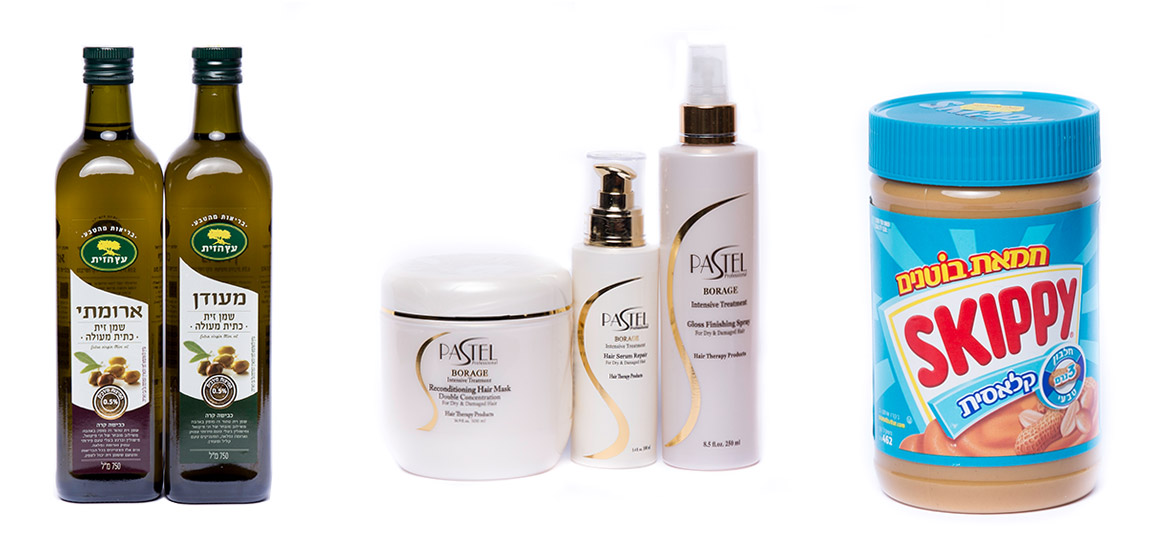
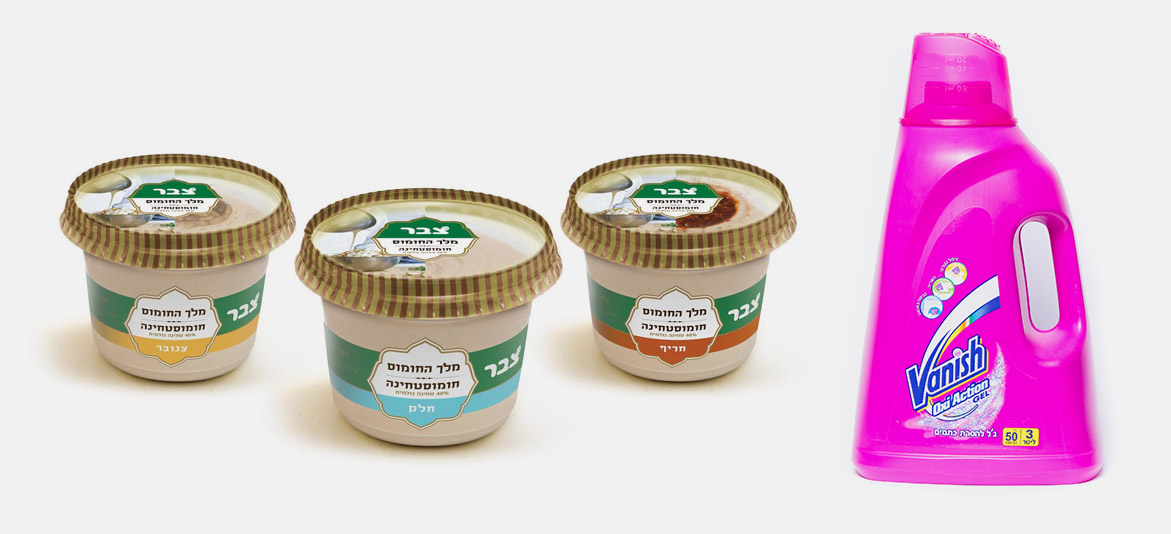
Self-Adhesive Labels
Stickers are the most basic labels, but they can be quite useful. We had the biggest customers in the market coming to us and we have learned how to reach the full potential of our stickers.
We provide a variety of stickers and adhesives for different products, with precise designs made by our graphic designers’ crew of 7, using the best and latest software and additionally, by using special software we can visualize the final product before the actual printing.
We use digital technology of CTP (for digital printing plates), Flexo- Printers and the best digital printing machines worldwide. The stickers can be cut into pieces are be taken away in rolls. Because plate development (CTP), pre-press and printing — both flexo and digital — all take place under our own roof, we are not dependent on subcontractors at any stage. A new job is delivered about a week from graphic approval, and a repeat job within 3–4 business days.
Labels available:
- Deep freeze resistant labels
- Humid resistant labels
- Labels which can be applied on wet and frosty surfaces
- Heat resistant labels
- Resealable labels
- Double sided labels (also printing on glue)
- Chemical resistant labels (lamination)
- Hot stamping/ Cold foil and embossing
- Coupon labels- folded up labels with info
- Printing different information on each label
- Promotion labels
- Special embossing options
Frequently Asked Questions — Self-Adhesive Labels
Which label suits a chilled or deep-frozen product?
Deep-frozen products need a label with an adhesive that stays stable at low temperatures and does not peel. We produce labels resistant to deep freeze, labels resistant to moisture, humidity and cold, and labels designed for application onto damp surfaces — such as ice cream and frozen meat packaging. The choice is determined by the actual application temperature on the production line, not only by the storage temperature.
What is the difference between a self-adhesive label and a shrink sleeve?
A self-adhesive label is a label with adhesive, applied to a defined area of the packaging. A shrink sleeve is a plastic sleeve that goes over the whole package and shrinks with heat until it conforms to its shape. A self-adhesive label suits cases where a specific area of the product needs to be marked, or where information changes between production runs. A sleeve suits cases where 360° graphic coverage is wanted. Both are produced in-house.
Can different information be printed on each individual label?
Yes. We print variable data from label to label — serial numbers, batch codes, unique barcodes or promotional codes. This is done as part of the printing process, not as a separate stage.
Labels on rolls or in sheets — which to choose?
We supply labels both on rolls and as individual sheets. Rolls suit application by an automatic labelling machine on a production line and allow a high working rate. Individual sheets suit manual application or small runs. The choice is determined mainly by how the label is applied at the plant, not by order quantity.
Which label withstands contact with chemicals?
For products in contact with chemicals — detergents, cleaning agents, industrial products — we produce labels resistant to chemical contact using lamination, which protects the print from abrasion and rub-off. Alongside these we offer labels with a protective varnish coating and light-resistant labels.
What is a jumper label, and when is it used?
A jumper label — also called a pop-up label — is a label where part of it is stuck to the product and the other part stays free and springs outward. It stands out on the shelf and draws attention, so it is used mainly to flag promotions, new products or marketing messages on existing packaging.
Which printing technologies are behind the labels?
We develop plates using digital technology (CTP) and print on flexographic presses and digital presses. Graphic adaptation is carried out in our in-house pre-press department, which employs 7 graphic designers.
Can the label be printed on both sides?
Yes. We produce labels printed on both sides, and also labels where printing is applied to the adhesive itself — a solution suited to cases where the information needs to be readable through transparent packaging.
What is the minimum order value?
The minimum order is 600–700 NIS. The exact amount is determined by the material and the type of job, and allows small manufacturers and limited runs to work with us as well.
How long does label production take from design approval?
A new job is delivered about a week from receipt of graphic approval. A repeat job is delivered within 3–4 business days. These lead times are possible because plate development, pre-press and printing all take place under our own roof.
Which graphic files should be sent?
We accept Adobe Illustrator graphic files. If something is missing from the file or adaptation to the printing process is needed, our pre-press department — which employs 7 graphic designers — handles it with the customer.
Design By MOZI